

Why Every Business Should Use Branded Social Media Templates
Scroll through any social media feed and you’ll notice two types of brands immediately. The first looks polished and consistent, even if you’ve never heard of them before. The second looks like they’re reinventing themselves every Tuesday. Different fonts, different colours, different vibes depending on the day—and not in a deliberate, creative way. More in a “someone made this five minutes before posting” way.
The difference between the two usually isn’t budget or team size. It’s structure. More specifically, it’s whether the brand uses branded social media templates or relies on improvisation every time they post. Social media templates don’t exist to limit creativity. They exist to give it a backbone. And for businesses that post regularly—especially small teams or solo founders—they’re not just helpful. They’re essential.
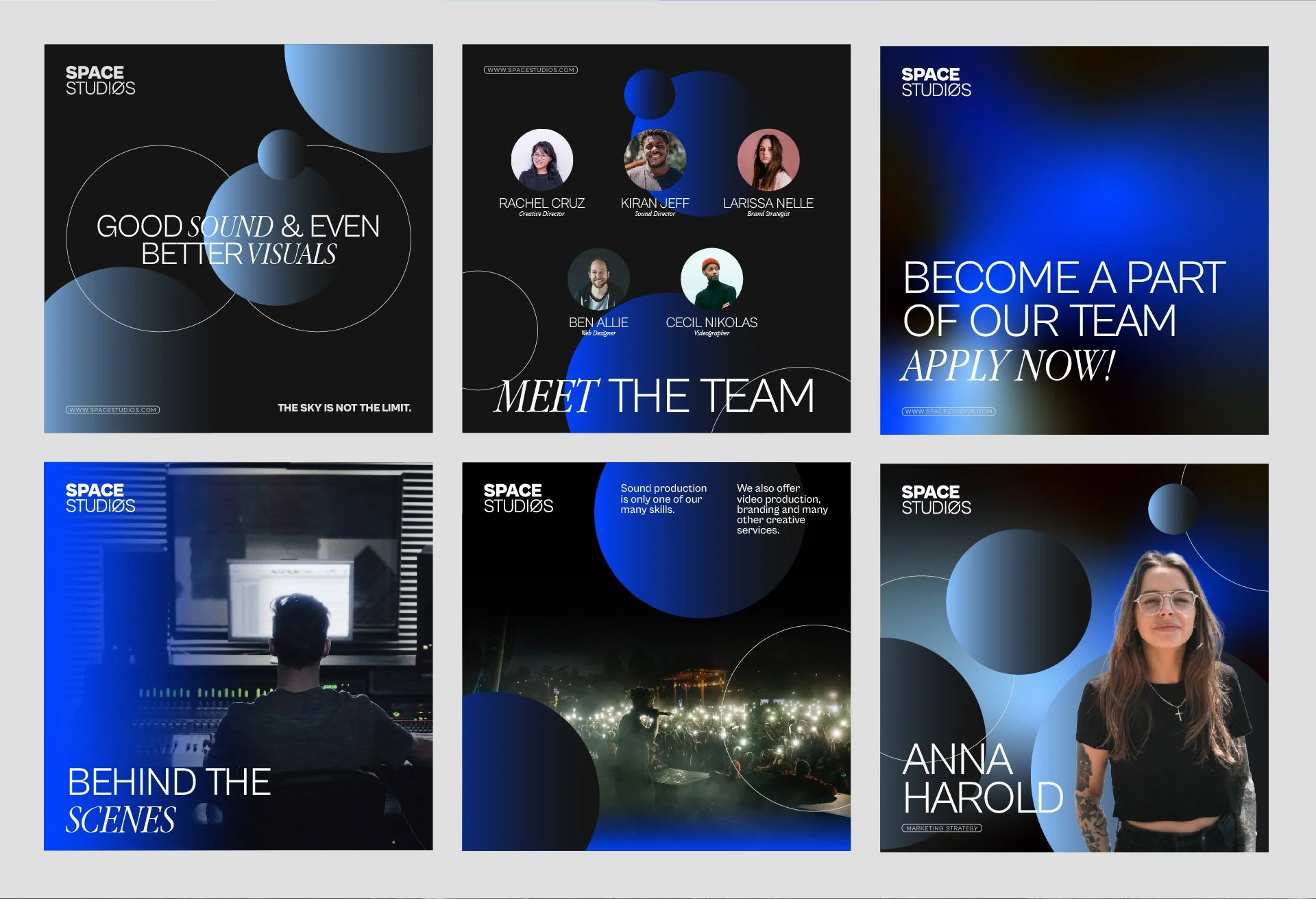
Social Media Kit for Space Studios © Vermeulen Design Studio
Consistency Is What Makes Brands Recognisable
People don’t remember brands because of a single post. They remember them because the visuals repeat often enough to become familiar. Consistency builds recognition, and recognition builds trust. When someone sees your content and instantly knows it’s yours—before reading the username—that’s when your branding is doing its job.
Branded templates create that recognition quietly and reliably. They lock in your colours, typography, spacing, and layout choices so that every post feels connected to the next one. You’re no longer starting from scratch each time or making design decisions based on what feels right in the moment. The rules are already set, and that’s a good thing.
Without templates, even well-intentioned brands tend to drift. Fonts change because someone wanted to try something “fresh.” Colours shift because a photo didn’t quite match the last post. Over time, the feed starts to feel visually unstable. With templates, that drift stops. The brand holds its shape.
Templates Save Time Without Sacrificing Quality
Creating social media content already takes time. Writing captions, planning posts, responding to comments—it all adds up. Design shouldn’t be the thing that slows everything down. Yet for many businesses, it’s the most frustrating part. Endless tweaking. Second-guessing font sizes. Exporting the wrong dimensions. Starting over because the post doesn’t “feel right.”
Templates remove that friction. When the layout, hierarchy, and visual balance are already established, creating content becomes faster and calmer. You drop in the text, swap the image, adjust the message, and move on. The result still looks intentional, but you didn’t have to wrestle with design decisions for an hour. This is especially important for businesses that want to show up consistently without burning out. Templates make it possible to batch content, delegate tasks, or come back to posting after a break without losing visual momentum.
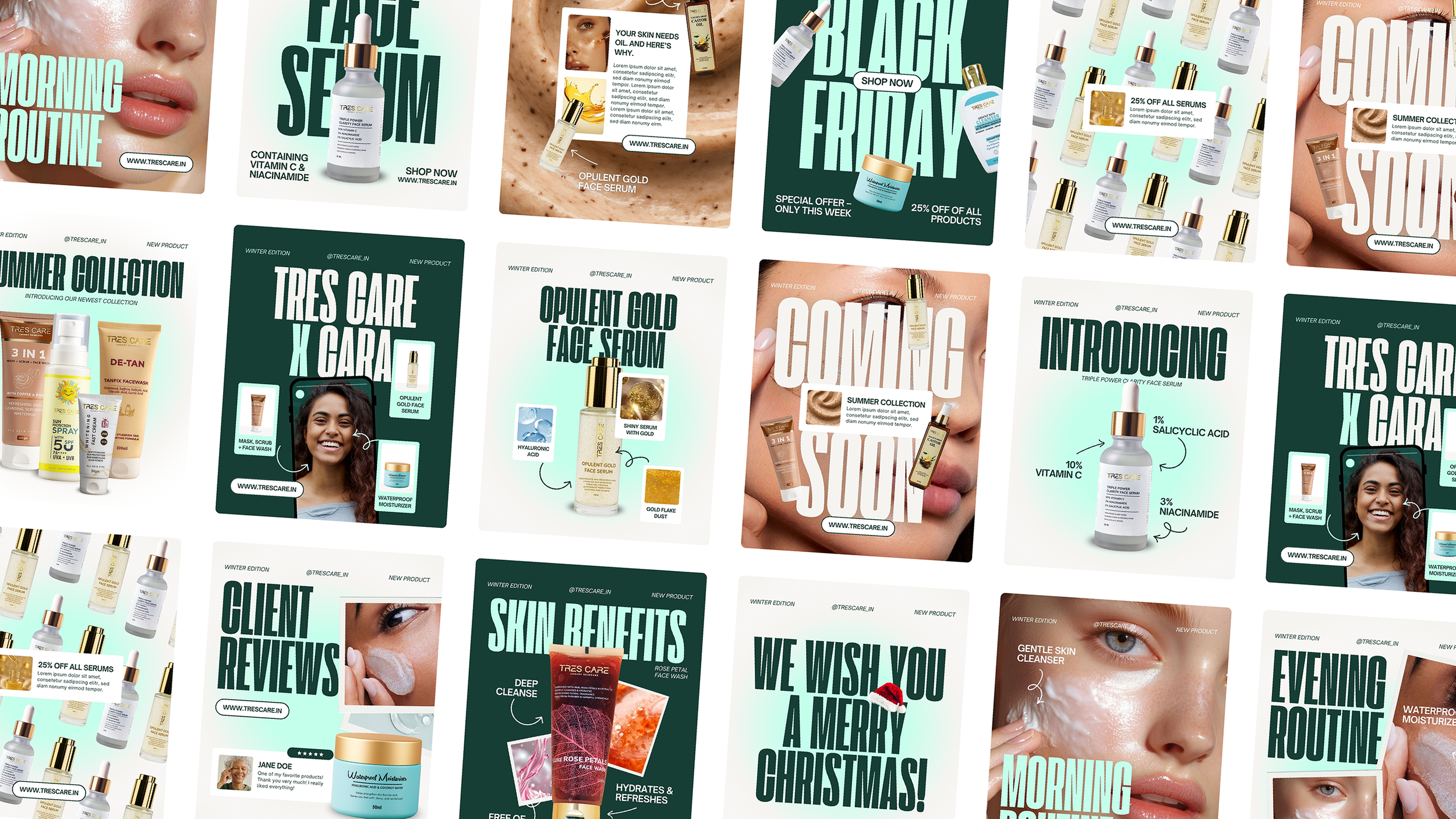
Social Media Kit for TresCare © Vermeulen Design Studio
Professional Design Signals Professional Business
Social media is often the first point of contact between a brand and a potential customer. Before someone visits your website or reads your “About” page, they scroll your feed. In those few seconds, they decide whether you look credible, organised, and worth paying attention to.
Branded templates help send the right signal. They show that your business takes itself seriously. Not in an overly polished, corporate way—but in a “we know who we are” way. Clean layouts, consistent typography, and thoughtful spacing communicate clarity. Even simple posts look intentional when they’re framed within a solid visual system.
On the flip side, inconsistent or cluttered visuals can undermine even the best message. If your graphics look chaotic, people subconsciously assume your business might be too.
Templates Create Freedom, Not Repetition
One of the most common concerns about templates is that everything will start to look the same. That only happens when templates are poorly designed or overly rigid. Good templates are flexible. They allow variation within a defined system.
Think of templates as a framework rather than a script. The structure stays consistent, but the content can shift. You can change headlines, imagery, formats, and messaging while keeping the visual language intact. This balance is what makes a feed feel cohesive without being boring.
In fact, brands that use templates well often look more creative, not less. Because the basics are handled, they can focus on stronger ideas, better copy, and more thoughtful content instead of worrying about alignment and font pairing.
Examples of Brands Using Templates Effectively
You don’t need to look far to find examples of branded templates in action. Many content-driven brands rely on them heavily, even if it’s not obvious at first glance.
Take educational brands on Instagram, for example. Many use recurring layouts for tips, carousels, or announcements. The structure stays the same, but the information changes. Over time, followers recognise the format instantly and know what kind of value to expect before they even swipe.
Coaches, designers, and consultants frequently rely on consistent layouts for testimonials, quotes, and insights. The repetition builds familiarity, and familiarity builds trust. Even if the content changes, the brand presence remains stable.
Larger brands do this too, just at scale. Their templates are often more subtle, but the principle is the same. Reusable systems that ensure consistency across platforms, campaigns, and teams.
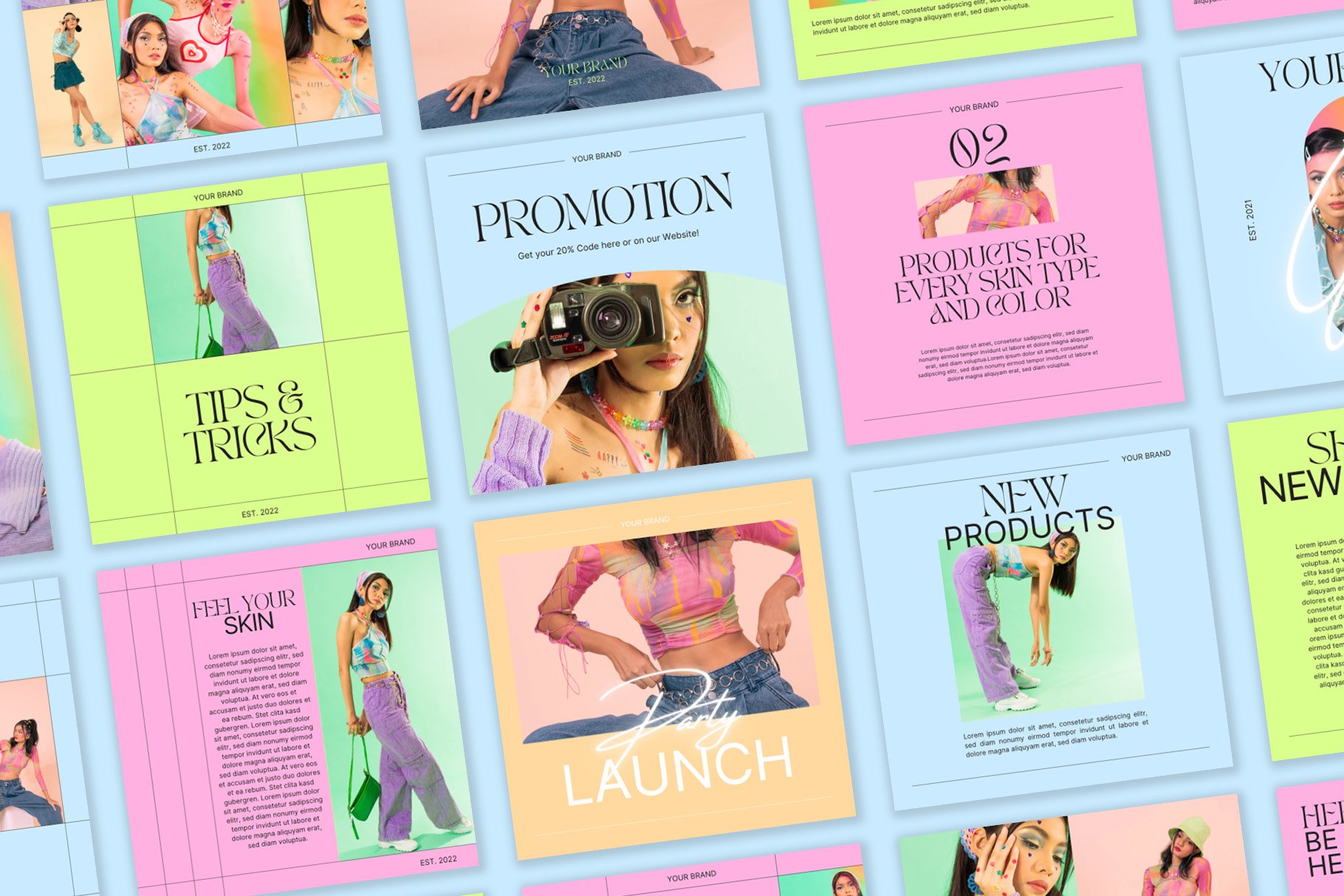
Premade Social Media Kit © Vermeulen Design Studio
Templates Support Growth and Delegation
As businesses grow, content creation is rarely handled by one person forever. Someone else might step in to help with posting, design, or marketing. Without templates, that transition often leads to inconsistency. Everyone has their own interpretation of what “on brand” means.
Templates solve that problem before it starts. They act as visual guidelines in practice, not just theory. Anyone working on your content can follow the same structure and produce results that look aligned with the brand. This makes collaboration smoother and reduces the need for constant corrections. Even if you’re currently a team of one, templates future-proof your brand. They create continuity as your business evolves.
Why Templates Convert Better Than Random Posts
There’s also a practical, performance-driven reason to use branded templates: they help content convert. Clear hierarchy, readable typography, and consistent layouts make posts easier to consume. When information is structured well, people are more likely to stop scrolling, read, and engage.
Templates encourage clarity. They force you to think about what matters most in each post. Headlines become more intentional. Supporting text is easier to scan. Calls to action stand out instead of getting lost in decoration. Over time, this clarity improves engagement. Not because the posts are louder, but because they’re easier to understand.
Templates as Part of a Larger Visual System
Branded social media templates work best when they’re part of a bigger picture. They shouldn’t exist in isolation. Ideally, they reflect the same colours, typography, and tone used on your website, in your marketing materials, and across your brand as a whole.
When everything connects visually, the brand feels cohesive no matter where someone encounters it. Social media becomes an extension of the brand, not a separate experiment. Templates are often the bridge that makes that consistency achievable on a daily basis.
Final Thoughts — and a Practical Starting Point
Branded social media templates aren’t about making your feed look perfect. They’re about creating structure, saving time, and showing up consistently without overthinking every post. They allow businesses to focus on content and connection instead of design chaos.
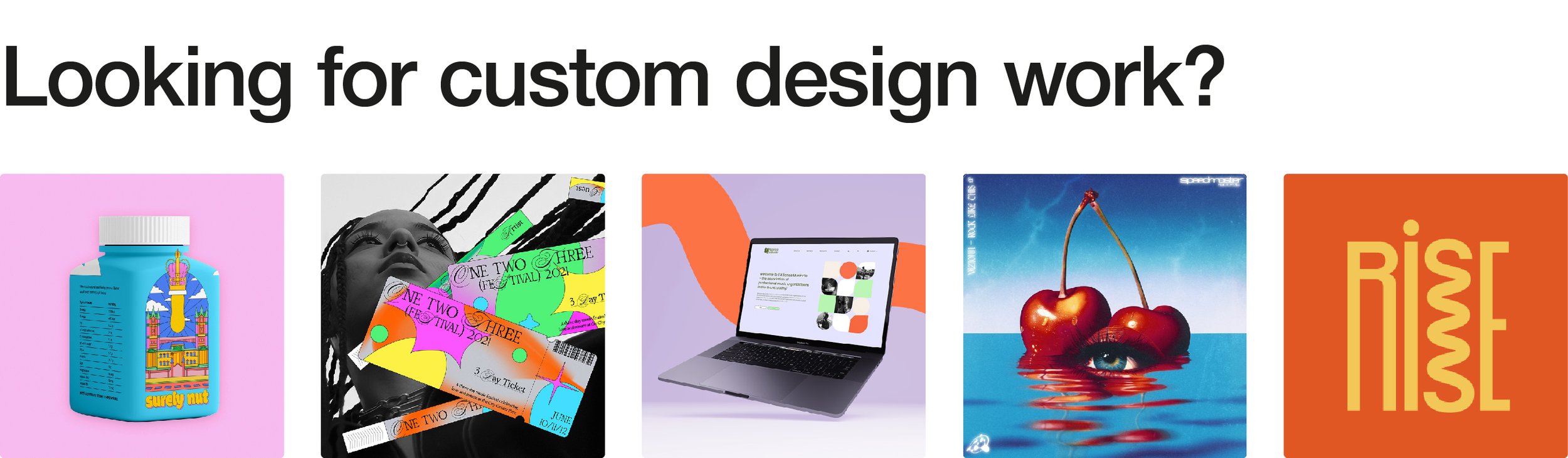
If setting up branded social media templates feels overwhelming or you simply don’t have the time, there are two solid ways to handle it. I can design a custom, ready-to-use social media kit tailored specifically to your brand, your content, and how you actually show up online. And if you’re looking for a faster, more budget-friendly option, you can also choose one of the pre-made social media kits available in my shop and adapt it to your needs. Either way, the goal is the same: consistency, clarity, and less guesswork every time you post.


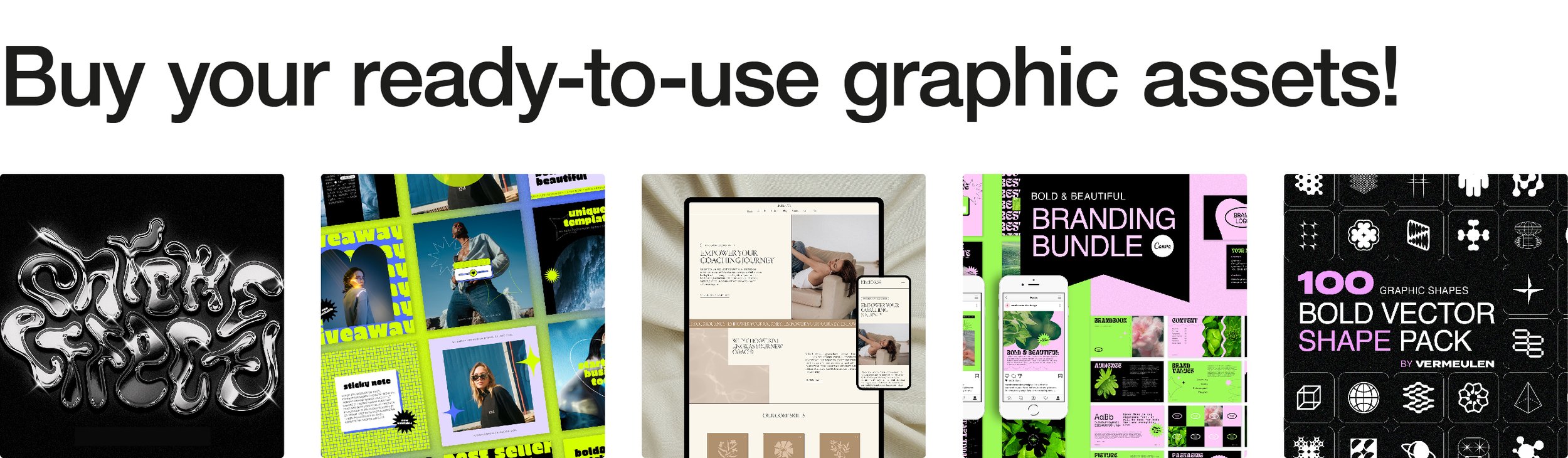
COSMIC KNOWLEDGE XL
Introducing our new social media templates (40 post templates (1080x1080px) | 40 story templates (1080x1920px) | 100% editable Canva file) – your key to effortless social media success. These fully editable and customizable Canva Templates are perfect for Instagram, Facebook, LinkedIn, and more. Our professional social media kit simplifies your social marketing, creating a consistent feed that reflects your style. Say goodbye to hours spent designing posts!
Canva is a free and beginner-friendly design tool, that ensures accessibility for everyone. Edit on any device, customize colors and text, and add your photos with ease. No Canva Pro Account is needed.
Upon purchase, you'll receive an immediate download link via mail.
We kindly request that you respect intellectual property; reselling or redistributing purchased designs is strictly prohibited. Please keep in mind that this is a digital file and, as such, returns or exchanges are not possible.